ACT V - Ouroboros Society
I remember the smell of the hallway.
Cheap disinfectant; reheated coffee; aged silence.
My mother always drove in silence.
Her hands firm on the wheel; her eyes fixed too hard on the road; as if looking at me could reveal something she didn’t want to face.
I was twelve when I began to understand that the visit wasn’t just family.
It was political.
The building was too discreet to be a prison; too comfortable to be freedom.
He waited for us sitting near the window; the same window every day; the same garden; the same trees; as if the world had been reduced to a fixed frame.
Grandpa.He smiled as if nothing were wrong.
My mother never fully entered; she stayed near the door; arms crossed; body leaning back; like someone who doesn’t want to belong to that space.
I asked for stories.
He never spoke of himself directly.
He spoke of the world; of the silent Friday; of the seventy-two hours when everyone was equal; of the inevitable return.
They should have eliminated money; not redistributed it.I didn’t fully understand; but I felt that sentence carried something greater than I could bear.
At school, I learned another version.
Digital terrorism.
Global collapse.
Indirect deaths.
Economic instability.
The necessity of permanent surveillance.
I learned that my grandfather was an example of what one should not do when one believes too strongly in being right.
I came home and asked my mother.
Did he kill people.She didn’t answer immediately.
People died.The difference between the two sentences haunted me for years.
I kept visiting for a while; then I stopped.
Adolescence brought shame; brought comparison; brought the weight of carrying a surname associated with international security reports.
I chose to distance myself.
Not out of conviction; out of social survival.
He remained there; window; garden; constant monitoring; rare visits.
I heard he spent hours staring at the locked computer screen; he couldn’t program; he couldn’t access networks; he couldn’t talk to former collaborators; he could only remember.
When I was seventeen, I stopped going entirely.
My mother never insisted that I return.
Her silence was approval.
The world had already returned to normal; markets functioning; inequality restored; security reinforced; every transaction linked to biometric identity; every identity linked to complete history.
We lived better; they said.
We lived more protected.
But something in me was never fully comfortable with the word protected.
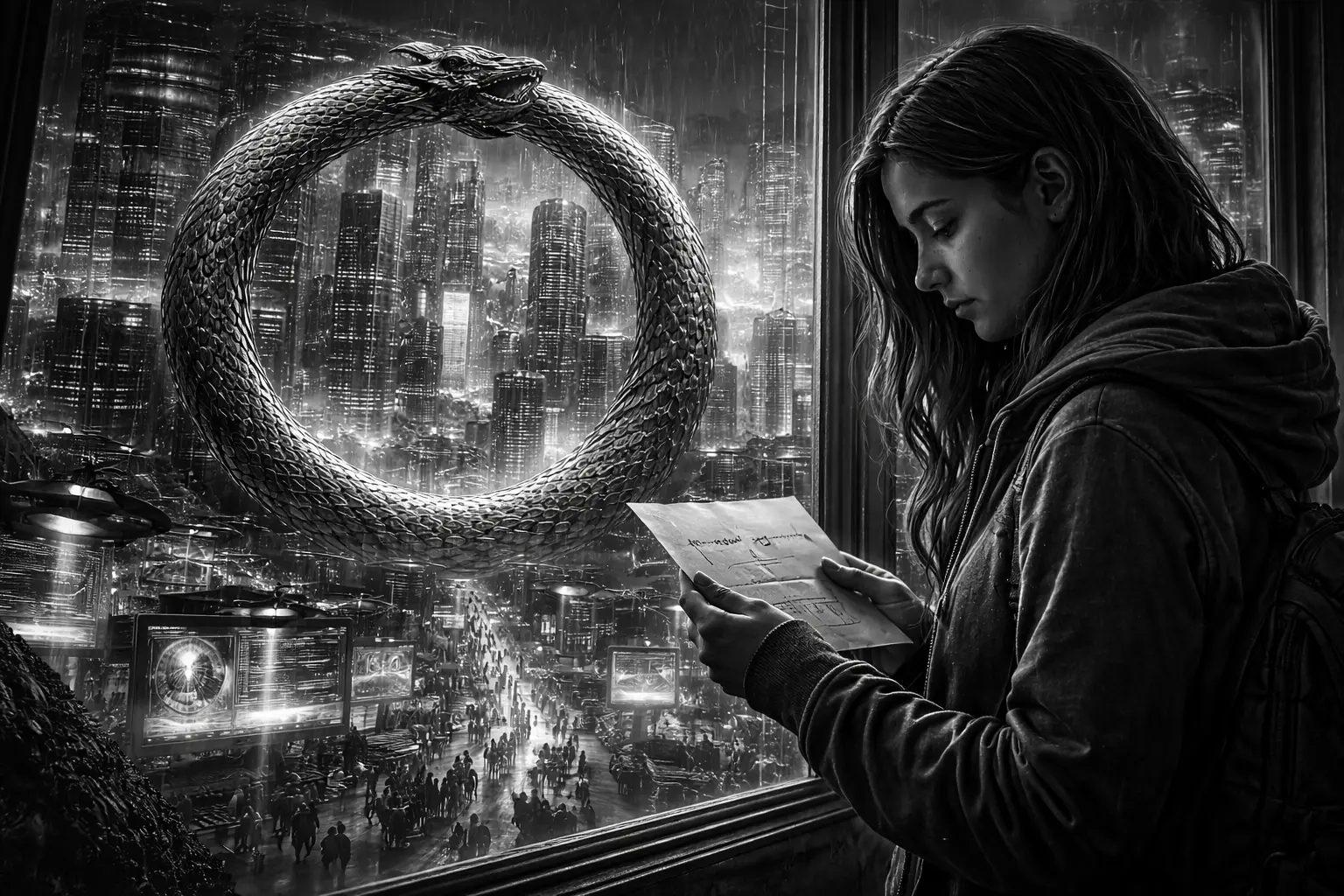
Years later, I received a letter.
Physical paper; rare; almost anachronistic.
Inside; just a few lines; and a number.
No emotional explanation; no request for forgiveness; no attempt to rewrite the past.
Just a number.
It took me weeks to call.
When I called; his voice was more fragile; but not regretful.
You've grown.I said I had understood everything.
I lied.
He said the story ended sadly.
I asked how.
We went back to kneeling; only now with sensors on our knees.I laughed; not from humor; from discomfort.
He coughed; took a few seconds to breathe properly.
Alice; structures don't fall because they're unjust; they fall because they cease to be necessary.I didn’t know what to say.
I hung up thinking that was just another enigmatic sentence; another attempt to justify the unjustifiable.
Months later; he died.
There were no big headlines; there were no protests; there were no public tributes.
Just a discreet record; death of an individual under state monitoring.
At the funeral; few people; almost no memories shared out loud.
My mother remained rigid; firm; unshakable.
I felt something that wasn’t exactly grief.
It was delay.
As if I had arrived too late to understand.
It was only when I found the files; years later; that the circular shape of the story began to reveal itself.
Ouroboros.
The serpent that bites its own tail.
We destroy; we rebuild; we destroy; we rebuild.
He had been judged for trying to interrupt the cycle.
But perhaps the cycle didn’t want to be interrupted.
Perhaps it only wanted to be understood.
At that time; I still didn’t know what my role would be.
I was just the granddaughter who stopped visiting.
The daughter who chose stability.
The young woman who believed that neutrality was maturity.
But neutrality is merely postponement.
And postponement is the most comfortable way of participating in a system we claim to question.
The world was stable again.
And I was inside it.
Not yet knowing that the dormant code was also waiting for me.