ACT IV - The Invisible Trial
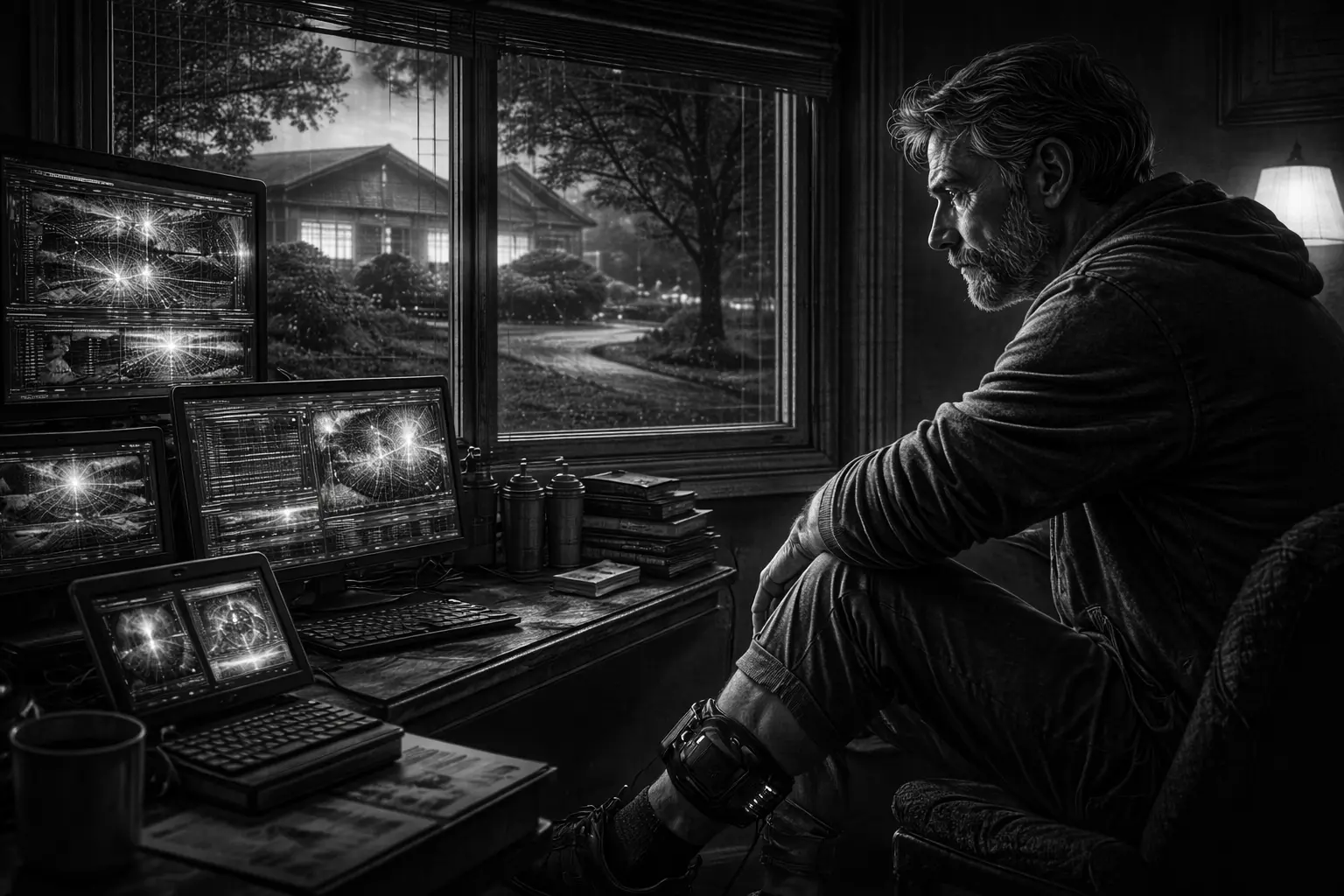
He wasn’t arrested in a cinematic dawn raid.
There was no door kicked in.
There were no shouts.
There were no helicopters circling overhead.
There was a formal notification.
At 06:12 on a quiet Thursday, three black cars parked in front of the house where he had lived for decades. The street remained calm; neighbors watched through the cracks; no one fully understood what was happening; but everyone felt it was too large to be ordinary.
They knocked on the door.
Sir, we need you to come with us.He already knew.
He didn’t ask where.
He didn’t ask for how long.
He only asked if he could shut down the computer.
At 06:23, the servers he kept at home had already been mirrored in some government facility. Logs copied; disks cloned; backups analyzed in real time.
He walked to the car like someone going to the doctor to receive a diagnosis they already know.
It wasn’t a surprise.
It was a consequence.
The trial was not televised.
It was technical.
Cold rooms; code projections; experts explaining lines that few there understood; prosecutors repeating the word terrorism as if it were a mantra capable of restoring order.
He watched in silence.
They showed numbers of indirect deaths; hospitals without supplies; property conflicts; logistical collapses; statistics that transformed human suffering into acceptable graphs.
Are you aware of the impact of what you did.He was.
But impact was not intention.
They asked for names.
Who else was involved.He smiled for the first time; not from pride; from exhaustion.
Ideas have no owner.The sentence was recorded as an affront.
They offered reduced sentencing; plea bargains; partial reconstruction of the academic reputation he had possessed before becoming just a number in a global threat report.
He refused.
Not out of heroism.
Out of coherence.
He knew the error had not been technical; the code had worked exactly as designed; the redistribution had occurred with mathematical precision; the equality had been real.
The error had been human.
And humans cannot be patched with a software update.
At 19:40 on the third day of interrogation, one of the analysts asked something different.
Did you expect it to work.Silence.
He took time to answer; not because he didn’t have an answer; but because the answer didn’t fit in a court record.
I expected it to reveal.Revealing is not saving.
Revealing is exposing.
The verdict came weeks later; perpetual house arrest; constant monitoring; restricted network access; prohibition of contact with international suspects; life confined to his own home; freedom reduced to the perimeter of memory.
Society needed someone responsible; and he was sufficiently symbolic.
They didn’t execute him; because martyrs are dangerous.
They didn’t free him; because ideas are persistent.
They condemned him to watch.
To watch the reconstruction of the system.
To watch the approval of the Total Tracking Law.
To watch the mandatory integration of biometric identity into every future transaction.
To watch the world become safer; and more surveilled.
He spent his days looking through the window; the same garden; the same trees; the same indifferent sky.
At night, he mentally reviewed the code he had written; every function; every variable; every choice.
The routine that had lost the vote still existed; hidden; dormant; unexecuted.
He thought of it the way one thinks of a child who was never born.
Sometimes he asked himself if he should have been more radical; if he should have erased everything; records; properties; legal memories; not just balances.
Sometimes he thought humanity hadn’t failed; it had merely reacted as it always reacts; seeking advantage in the newly created space.
The world moved on.
Markets reopened; inequality reappeared; contracts were revalidated; central banks announced restored stability.
He watched.
Not with absolute regret.
Not with pride.
With a strange form of lucidity.
He knew he had been judged by consequences; not by intention.
He also knew that intention matters little when the result wounds.
Years later, when his granddaughter was still a child and asked for stories, he never spoke of heroism.
He spoke of choice.
Every structure needs to be tested.She didn’t understand.
Perhaps he didn’t fully understand either.
But in the silence of house arrest, monitored by algorithms that tracked every click; every word; every digital breath; he was certain of one thing.
The system hadn’t learned to be just.
It had learned to be resilient.
And resilience is not redemption.
It is preparation.
While the world believed it had won, he knew it had merely postponed.
The trial had ended.
The story had not.