Interlude VI - The Surveillance
The collapse taught governments something.
Not about justice.
About control.
In the week following the partial stabilization of markets; a silent update swept through central servers. There was no public announcement; no press conference; no reassuring speech.
There was a patch.
In the internal logs, the nomenclature was too technical to frighten.
identity_sync_enabled
biometric_trace_linked
historical_pattern_analysis_active
Nothing there said surveillance.
It said efficiency.
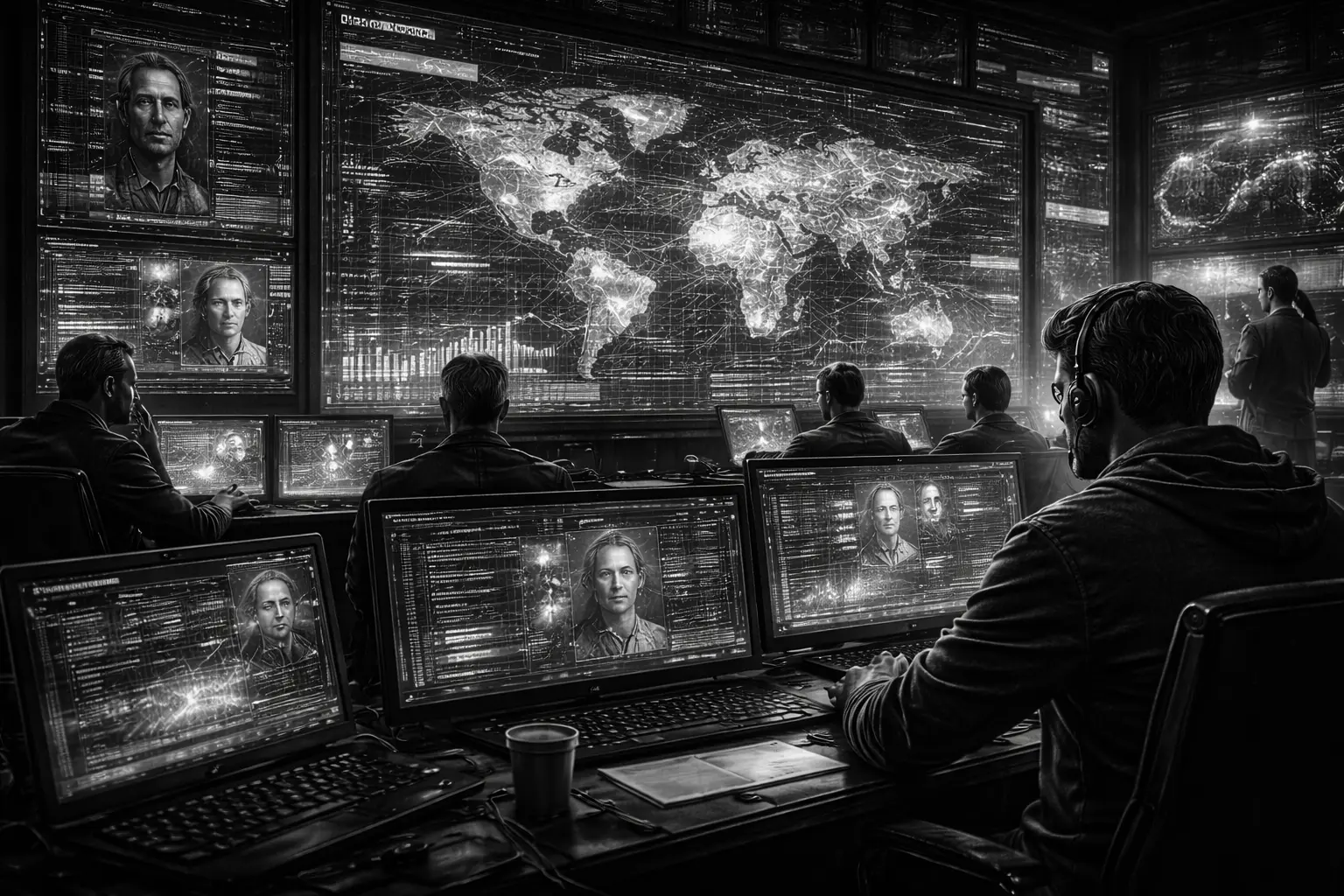
In a windowless room; analysts watched maps that pulsed in real time. Every transaction carried confirmed identity; every identity carried complete history; every history was now cross-referenced with behavior.
Not to punish.
To prevent.
One of the technicians asked:
Isn't this excessive?The superior responded without taking his eyes off the screen.
What was excessive was losing our reference.In the new architecture, no transfer could occur without biometric linkage validated by multiple sources. No property could change ownership without prior behavioral tracking. No account could be created without physical anchoring.
rollback_attempt_detected
quorum_mismatch
consensus_override_denied
The message blinked briefly before disappearing.
Elsewhere on the network; an independent programmer noticed his access had been limited. There was no formal block; just slowness; just extra authentication requirements; just increasing friction.
Friction is control with the appearance of care.
On social media, the population celebrated restored stability.
Payments were working again.
Supplies were circulating again.
Contracts were being recognized again.
But now every financial gesture left a permanent trail.
A mother tried to donate money anonymously to a hospital.
The system refused.
Identification required.She gave up.
Not out of guilt.
Out of exhaustion.
At the monitoring center, one graph showed a reduction in anomalies.
Another graph showed an increase in predictability.
Predictability is the new name for security.
In an internal report, someone wrote:
The next rupture won’t be external. It will be anticipated.
The surveillance didn’t shout.
It didn’t arrest.
It didn’t confiscate.
It only learned.
And systems that learn don’t become more fragile.
They become attentive.
In the silence of automatic updates; the world recovered stability.
But stability now demanded total transparency.
There were no more invisible errors.
There were no more opaque transactions.
There was no more comfortable anonymity.
The collapse taught something.
And the lesson wasn’t humility.
It was centralization.