Twilight of Hope

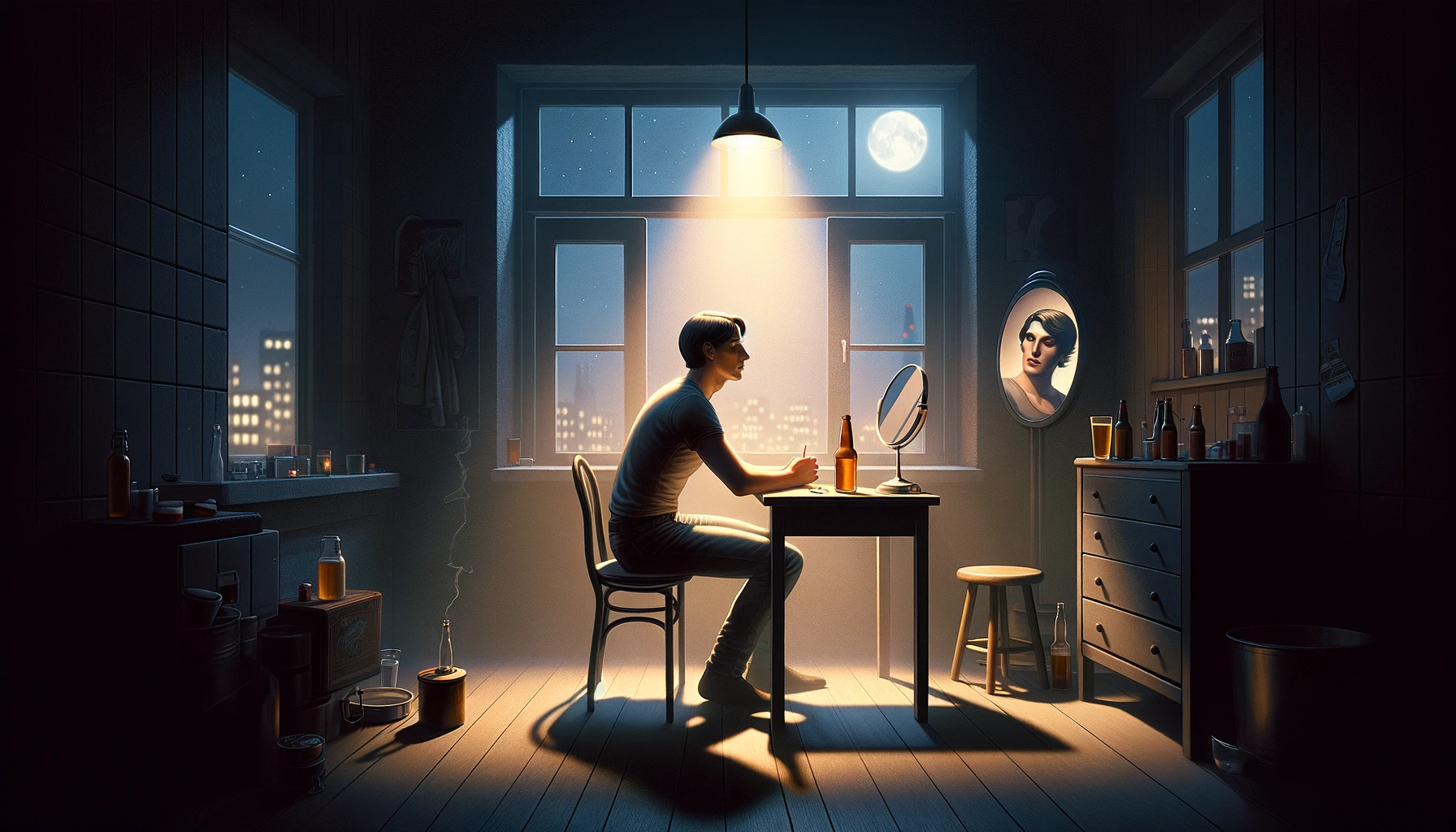
In a quiet neighborhood of Indaiatuba, there was a small blue house where Laura lived. Every day, she faced the bathroom mirror, a battle that began with a deep breath and a determined look. The reflection showed a face she no longer recognized as hers—hard features, an unshaven beard. It was a memory of a man she never felt like she was.
That day, like so many others, Laura put on a little makeup, smoothing out her true expression lines. She got dressed without having a certain destination, just the desire to see herself as she really was. Her high silk stockings hugged her legs, now smooth and delicate, a contrast to the defined muscles of a past she tried to forget.
“After all, what does it mean to be a real man?”, she asked herself while choosing a flowery dress. Society insisted on labels such as “manly man” and “worker’s body”. But, for Laura, those were nothing more than empty words, echoes of a life she didn’t want to live.
On the street, people often only saw the face she wanted to change. But Laura knew who she was. She felt the lightness of her steps, almost as if she were floating, a skilled dancer on her urban stage. Her movements were poetry in motion, and with each step she felt more herself.
One day, during a walk in the Ecological Park, a stranger gave him a genuine smile and commented: “You move with enchanting grace. You look like a ballerina.” Those words touched her heart deeply, because, finally, someone saw not only the woman she was, but the art that exuded of being hers.
Living like Laura meant discovering yourself every day. It was facing the world with your head held high and your heart open, celebrating every small victory of your existence. At that moment, as the sun set, dyeing the sky pink and orange, Laura felt immense pride in herself. Not because she achieved great things, but because she was simply who she was. Authentic. Free. Overflowing with life. It was the true beauty of living as herself, and she wouldn’t trade it for the world.